

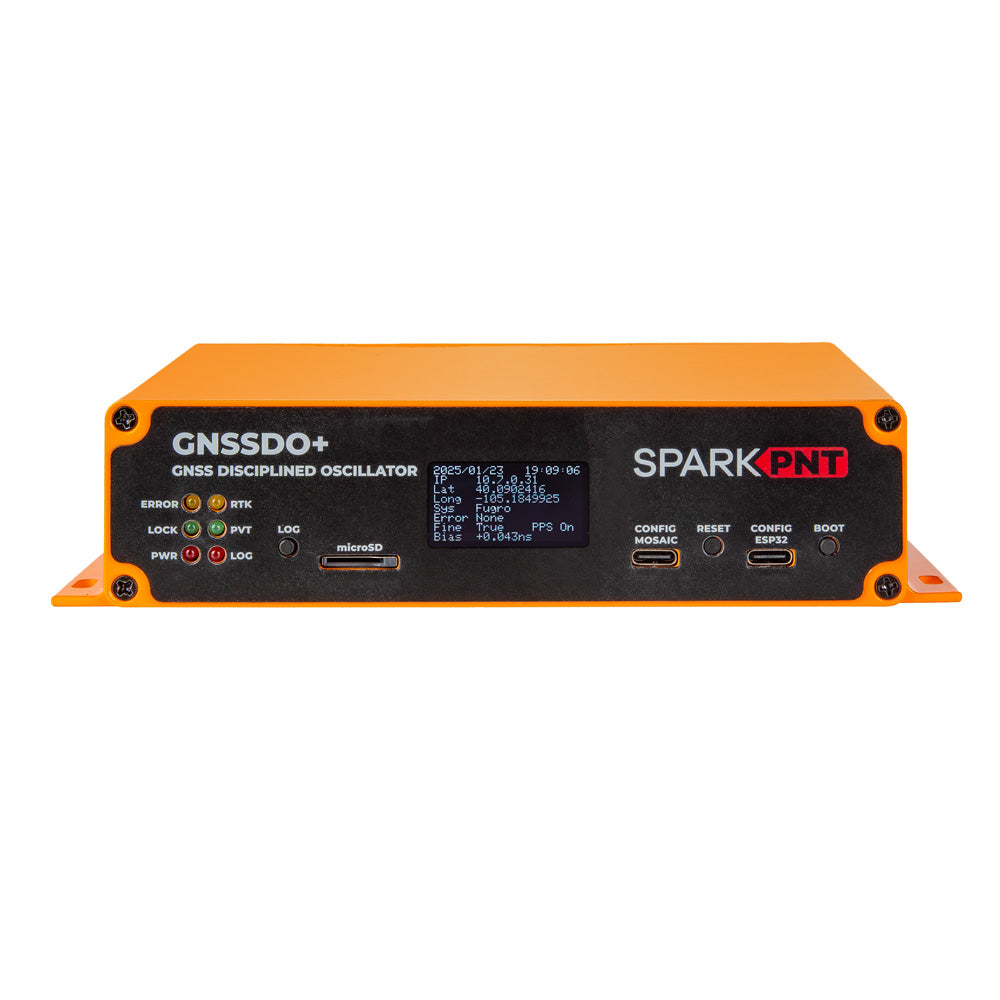
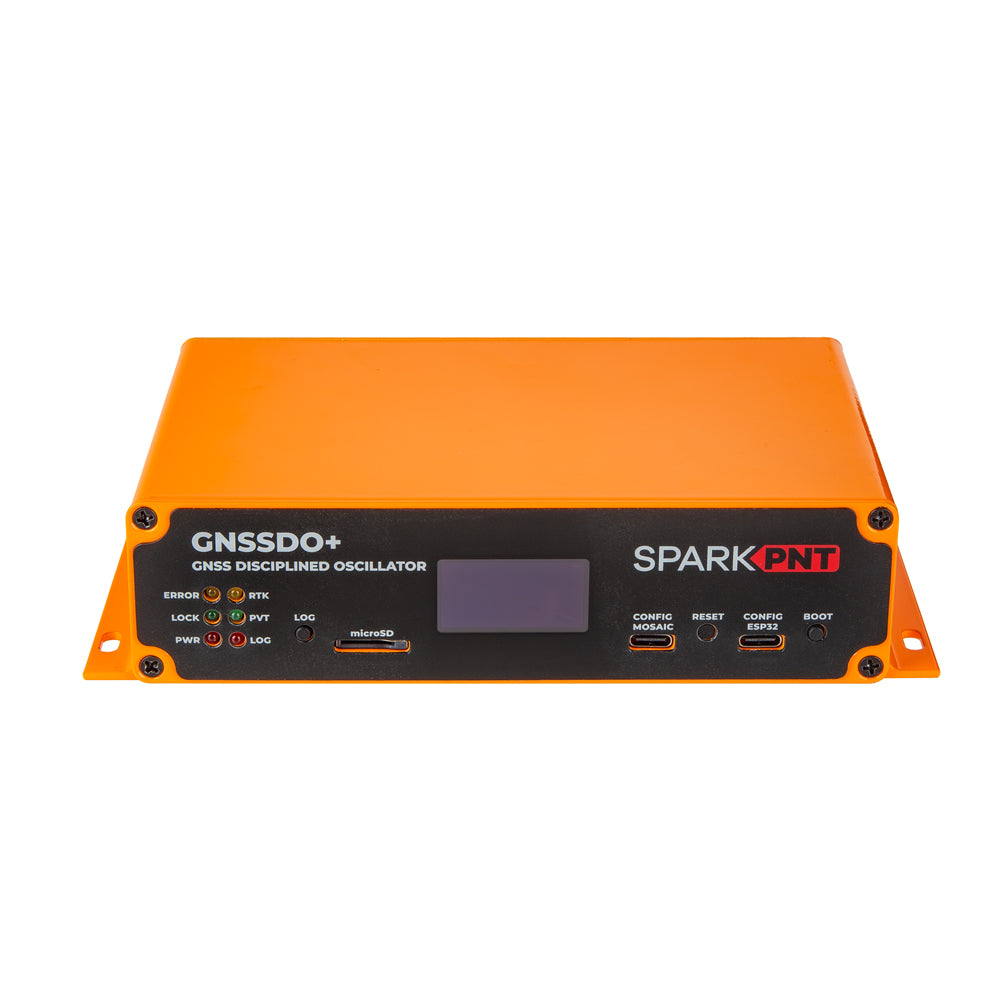
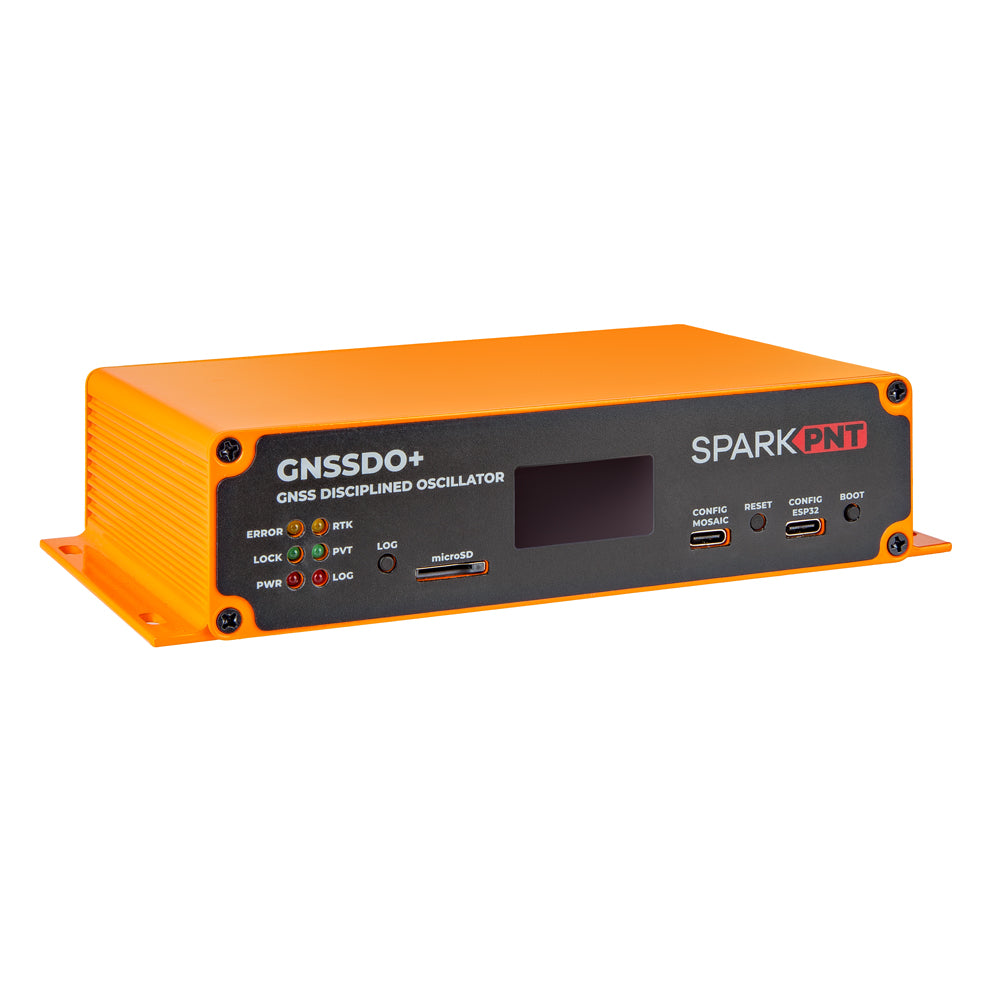
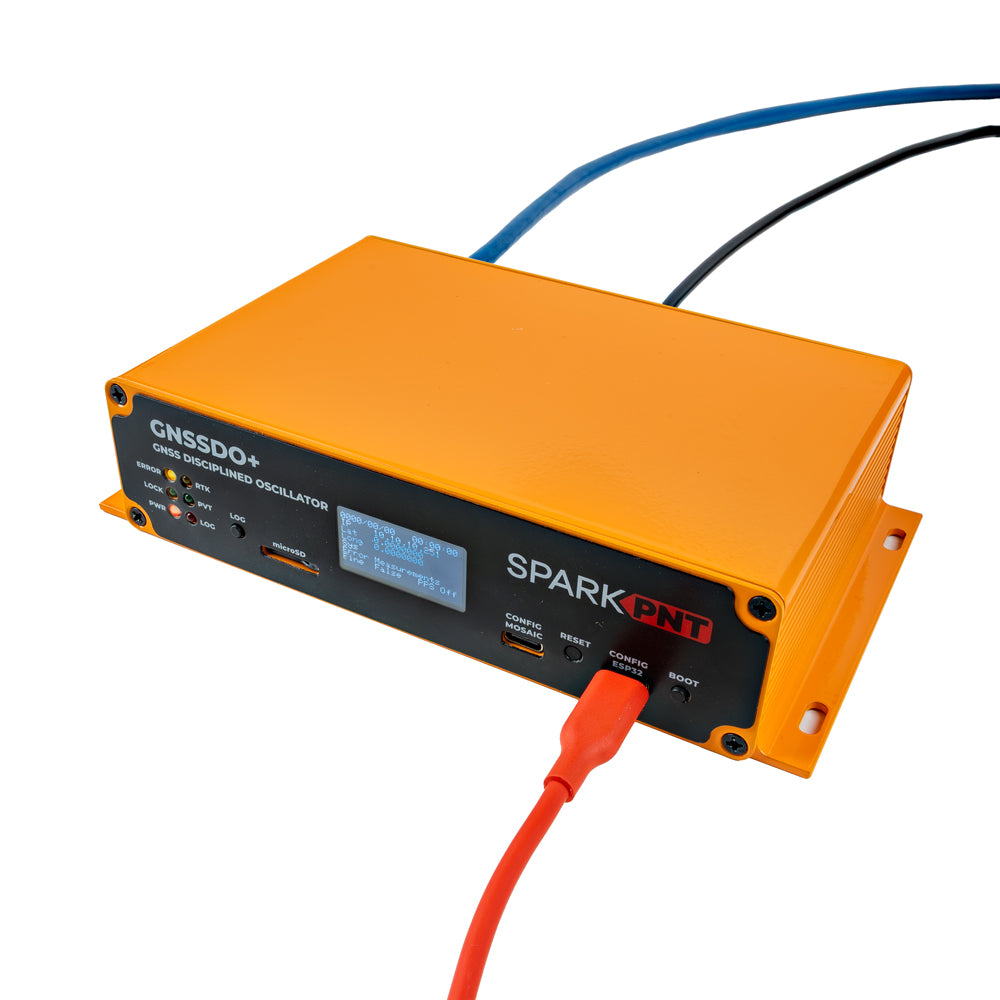



SXT-D GNSS Disciplined Oscillator Plus
Featuring the mosaic-T from Septentrio and the STP3593LF Double-Oven OCXO from Rakon, the SXT-D GNSS Disciplined Oscillator Plus provides ultra-precise timing output, enhanced frequency stability, and allows the reception of timing correction service AtomiChron® for accuracy better than 1ns.
Couldn't load pickup availability
Pickup available at 6333 Dry Creek Parkway
Usually ready in 24 hoursPairs well with


Choose from the options below and we'll get back to you as soon as possible.
-
SparkPNT Website Help
-
Technical Questions?
-
Buying in Bulk?
-
Reach Out Anytime
About the SXT-D GNSS Disciplined Oscillator Plus
Included in the Box
Cased Timing Device

L1/L2/L5 Antenna
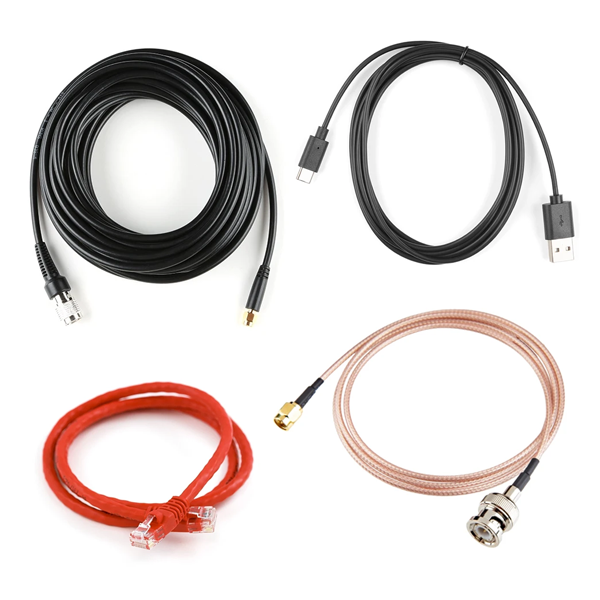
Interface, USB, CAT 6 & SMA to BNC Cables
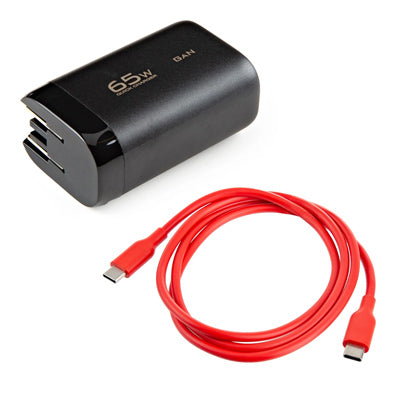
Power Supply and Cable

32GB microSD Card (Class 10)
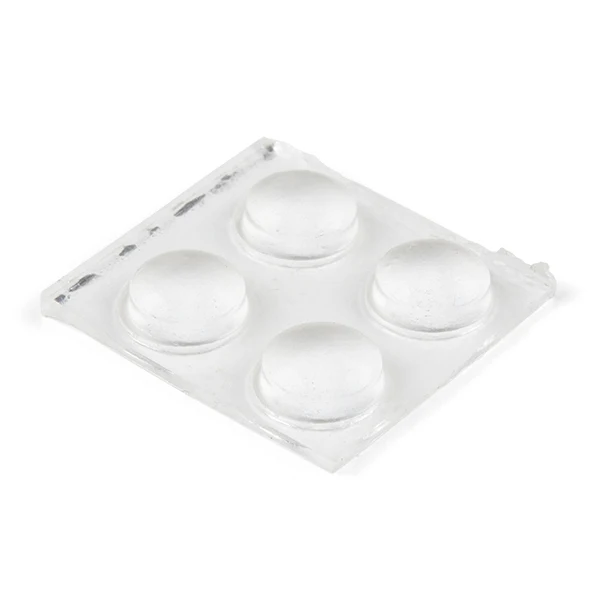
4 silicon bumpers
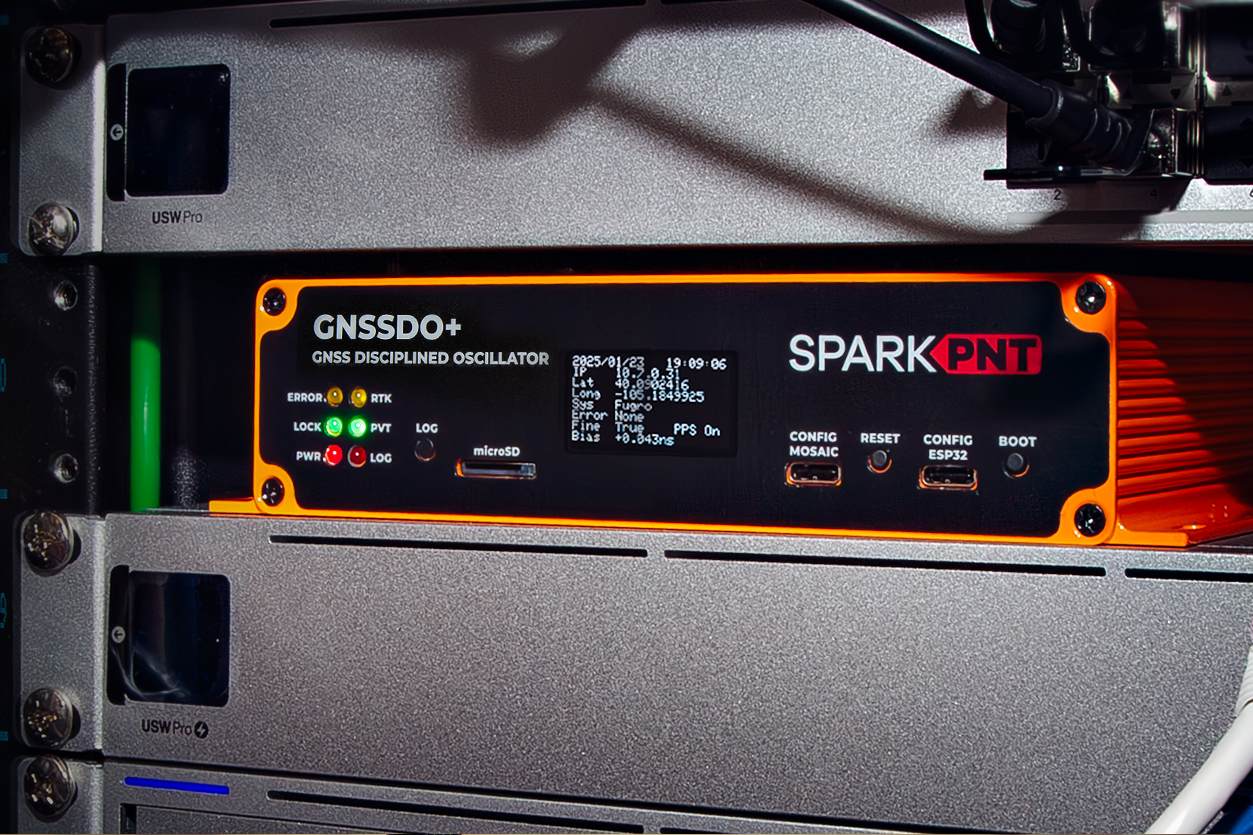
Top-tier frequency stability.
With an Allan Deviation below 1E-14 at 10000 seconds with AtomiChron® enabled, the GNSSDO+ is a perfect time and frequency solution for your lab or remote equipment.
Technical Specifications
GNSS Details
Reception:
GNSS Constellations:
Timing Details
Timing Module:
mosaic-T from Septentrio
Oscillator:
Rakon STP3593LF (Double-Oven OCXO) @ disciplined 10MHz output
Time Pulse Precision
5ns out of the box. <1ns w/ Fugro Atomichron® subscription.
Fugro AtomiChron® is a global, real-time, precise clock synchronisation and authentication service based on GNSS, for applications that require resilient, accurate and reliable time and frequency approaching hydrogen maser performance. Learn more here.
Device Details
Weight:
1.1lbs
Dimensions:
18.6 x 4.1
Power Options
Communications
An integrated ESP32-WROVER provides a web console, USB-to-Ethernet capability, logging, and configuration without needing a separate microcontroller or host.
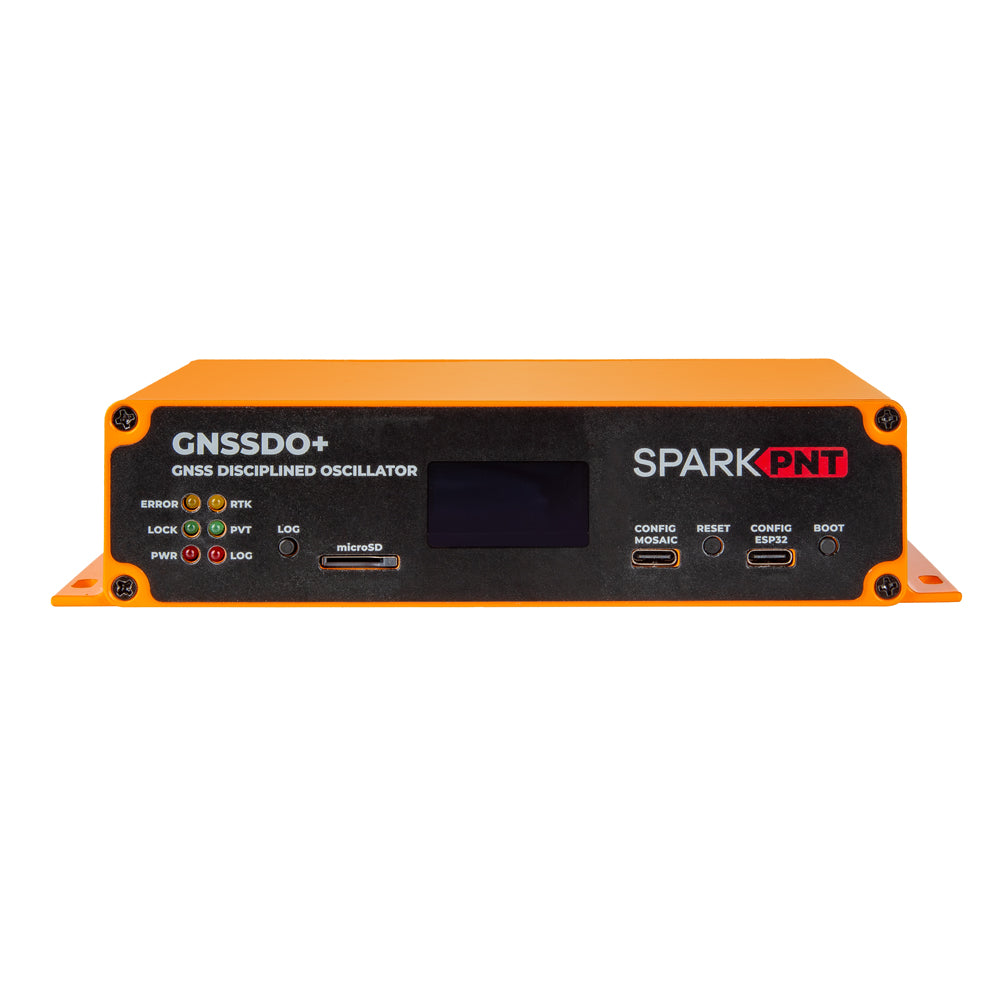
Front of Device

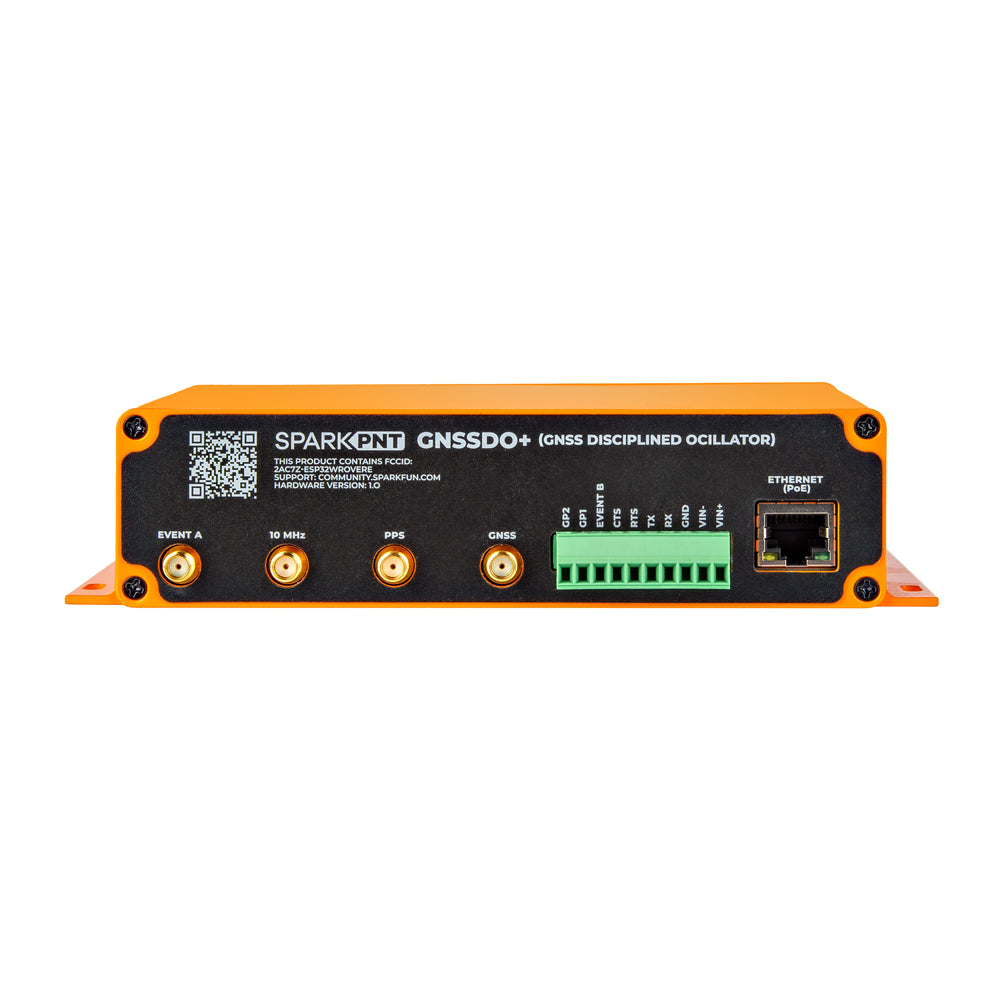
Back of Device

Who should use a GNSS Disciplined Oscillator?
Precision Timing Use Cases
Quantum and Physics Laboratories
Sub-nanosecond timing in a research or laboratory setting can lead to important research breakthroughs, especially in the quantum field.
Precision Metrology
Because the speed of light is a fundamental constant, precise time measurements lead to ultra-precise distance measurements.
Telecom and Network Operations
Cellular networks and data centers rely on precise timing for synchronization and data protection.
Critical Infrastructure
Power utilities, financial institutions, and transportation systems rely on precise timing for synchronization and navigation.
Security
Precise timestamps can provide authentication and replay protection as well as provide forensic insight to data breaches and hacks.
Navigation
Using satellite navigation, a 1-nanosecond error translates to about 30 centimeters of location error. Accurate timing maintains GNSS data integrity.
WARNING: This product can expose you to chemicals which are known to the State of California to cause cancer and birth defects or other reproductive harm. For more information go to www.P65Warnings.ca.gov
FAQs
Please read our FAQs page for more general information.
What's the difference between the SXT and the SXT-D?
The SXT and SXT-D share the same GNSS timing engine and timing accuracy. The difference is the oscillator: the SXT uses a Super-TCXO, while the SXT-D uses a Double-Oven OCXO for significantly better frequency stability and holdover performance during GNSS outages.
What exactly is a GNSS Disciplined Oscillator (GNSSDO)?
A GNSS Disciplined Oscillator (GNSSDO) combines a local precision oscillator with GNSS timing signals to create a highly stable and accurate time and frequency reference. The GNSS receiver continuously corrects the oscillator, providing long-term accuracy while maintaining short-term stability.
What is the difference between a GNSSDO and an atomic clock?
A GNSSDO derives its long-term accuracy from GNSS satellites, while an atomic clock generates its own reference using atomic transitions. A GNSSDO can achieve excellent accuracy and stability at a fraction of the cost, power consumption, and maintenance requirements of traditional atomic clocks.
How accurate are GNSS Disciplined Oscillators?
GNSSDOs can provides better than 5 ns timing precision using multi-frequency GNSS signals. In the case of SparkPNT's SXT and SXT-D, the real magic come with a Fugro AtomiChron® subscription, timing accuracy can be improved to better than 1 ns by sending timing correction data to the device.
Sub-nanosecond timing accuracy means the timing error is less than one billionth of a second relative to a reference timescale.
What is event timestamping?
Event timestamping records the precise time that an external event occurs. The SXT and SXT-D can timestamp events with better than 20 ns accuracy out of the box using the dedicated EventA input.